The End of SMTP: What companies need to know and how they can prepare
Renzo Eberhart
· Updated on
· 3 minutes reading time
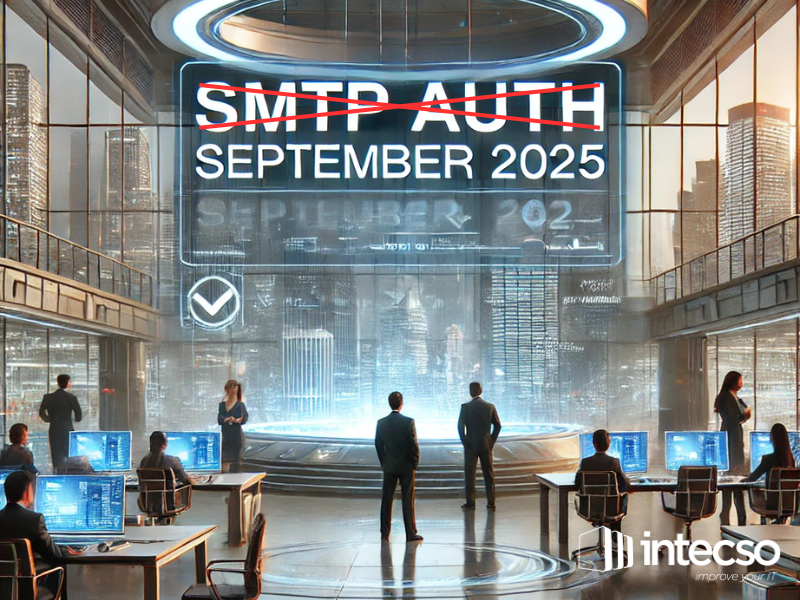
The traditional Simple Mail Transfer Protocol (SMTP) is facing a significant change. Microsoft plans to discontinue support for SMTP AUTH in Exchange Online by September 2025. This development marks an important step towards more secure and modern email technologies, but also presents companies with new challenges.
Thank you for reading this post, don't forget to subscribe!
In this article, we take a look at the implications of this change, the challenges and alternatives, and the best steps for companies to take to ensure a smooth transition.
1. The end of SMTP AUTH: Background and significance
Microsoft’s decision to disable SMTP AUTH in Exchange Online aims to minimize security risks. SMTP AUTH is based on older authentication mechanisms that are vulnerable to phishing, man-in-the-middle attacks, and credential stuffing.
Starting in September 2025, access to Exchange Online will only be possible through more secure alternatives using modern authentication methods such as OAuth 2.0. For companies, this means rethinking existing processes and systems that still use SMTP AUTH.
2. Challenges and alternatives
Challenges
Legacy devices: Many older devices such as printers or scanners that use SMTP AUTH will no longer be able to send emails.
Enterprise software: Systems that support SMTP AUTH exclusively could become unusable without customization.
Transition costs: Time and resources for migrating to modern technologies are a hurdle.
Alternatives
OAuth 2.0: This secure authentication protocol is robust and supports modern security standards).
Modern APIs: Solutions such as the Microsoft Graph API enable flexible and secure email delivery that goes beyond SMTP.
Azure Communication Services: Provides a central platform from Microsoft that allows outbound emails to be managed for all B2C communications. With SMTP support in Azure Communication Services, emails can be securely and easily sent (paid service).
SMTP Relay Services: Third-party services like SendGrid or Mailgun offer simple and secure email solutions with up-to-date security protocols.
3. Impact on email marketing
The abandonment of SMTP AUTH also affects the field of email marketing:
Email deliverability: Services with outdated infrastructure risk higher bounce rates and lower delivery rates.
Security: Modern authentication protocols improve security and minimize the risk that marketing emails are classified as spam.
Strategy adjustments: Companies must adapt existing email marketing campaigns to new technologies in order to continue communicating effectively with customers.
4. Best practices for a successful transition
Preparing for the end of SMTP AUTH requires careful planning. Here are the most important steps that companies should take:
Inventory of SMTP usage: Analyze which systems and devices use SMTP AUTH.
Device updates: Check if firmware updates are available that support modern protocols.
Migration to OAuth 2.0: Implement OAuth 2.0 for applications that require email access.
Integrating modern APIs: Use APIs like Microsoft Graph to better cover future developments.
Relay Services: Use SMTP relay services like SendGrid or Azure Communication Services.
Training of employees: Inform your IT team about the transition and offer training on implementing new solutions.
Conduct a test run: Ensure that all new systems are fully tested before the official changeover date.
Conclusion: The future of secure email communication
The end of SMTP AUTH marks the beginning of a new era of safer and more modern email technologies. While the transition brings challenges, it also offers opportunities for companies to optimize their systems and improve security standards.
Act now: Prepare for the transition
As an experienced IT service provider, Intecso AG supports companies in the seamless migration from SMTP AUTH to secure alternatives such as OAuth 2.0 or modern API solutions. Our experts offer personalized advice and comprehensive training to ensure that your company is well prepared for the upcoming changes.
Contact us today to future-proof your email systems and benefit from the latest technologies.
Written byRenzo EberhartCTO, Intecso AG«My passion is IT, which has not left me alone since I started studying computer science more than 25 years ago.»